
01
Siddeshwar U S
Math & computing student at MITI am a Mathematics and Computing student at MIT Manipal, mostly interested in quantum computing and the mathematics underneath machine learning.
Interpretability and evaluation are where a lot of that curiosity ends up going lately. I like projects with a clear question at the center, even when the honest answer turns out to be “no.”
EducationMIT ManipalMathematics & Computing · 2025–2029
Research interests
Questions I keep returning to.
Areas /Research interests
02
AI Researcher
03
ML Engineer
04
Mathematician
05
Quantum Information
Experience
Research, collaborations, and technical work.
Research Intern — IMSc Chennai
IMSc Chennai
LatestI spent this summer at IMSc doing theoretical physics — splitting my time between quantum information theory and perturbative QCD/Higgs physics with Prof. V. Ravindran. My first real research experience, and it stuck.
Apart Research — Digital Minds Hackathon
Apart Research
Joined Track 4 on preference measurement. I built J-space experiments comparing what a model says it prefers against what it actually chooses when forced to act, across Qwen family models, 4-bit quantized, running on Kaggle's free T4s. Also came out of it with a few good friends from Oracle, University of Maryland, and University of Waterloo.
Synergy Software/ML Taskphase
Synergy
An 11-task Python and ML sprint. I ended up with a scikit-learn pipeline hitting 99.39% test accuracy — the kind of project that is less about the result and more about getting comfortable moving fast through a full ML pipeline.
Papers
Published work, implementations, and reading notes.
Published
Work I have put my name on and stand behind.
PrefKit: Analyzing Preference Elicitation Methods in Qwen3 Family Models
Apart Research Sprint
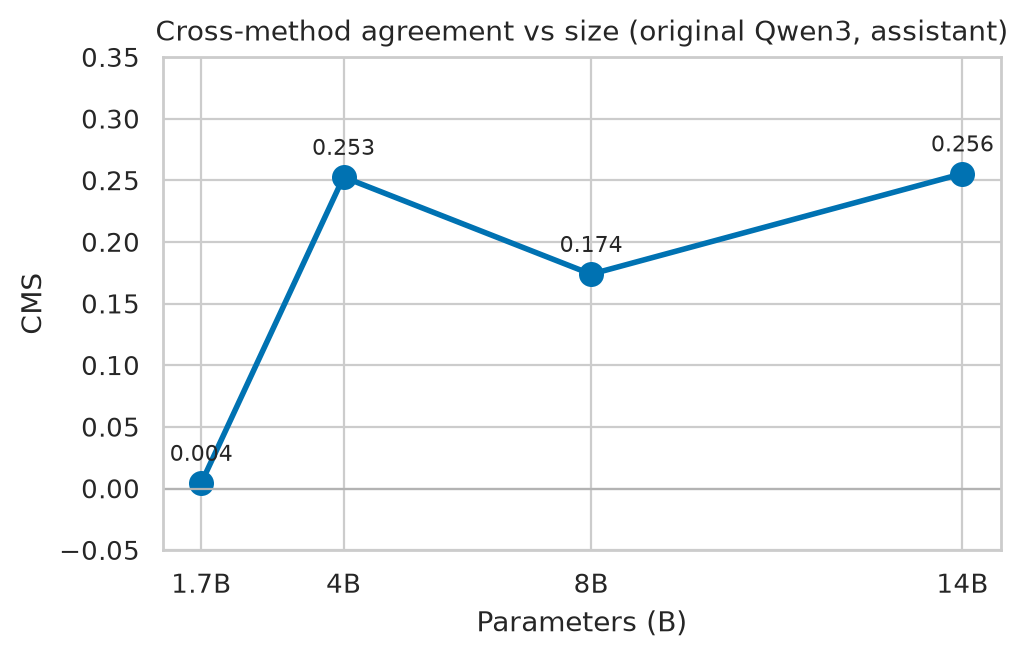
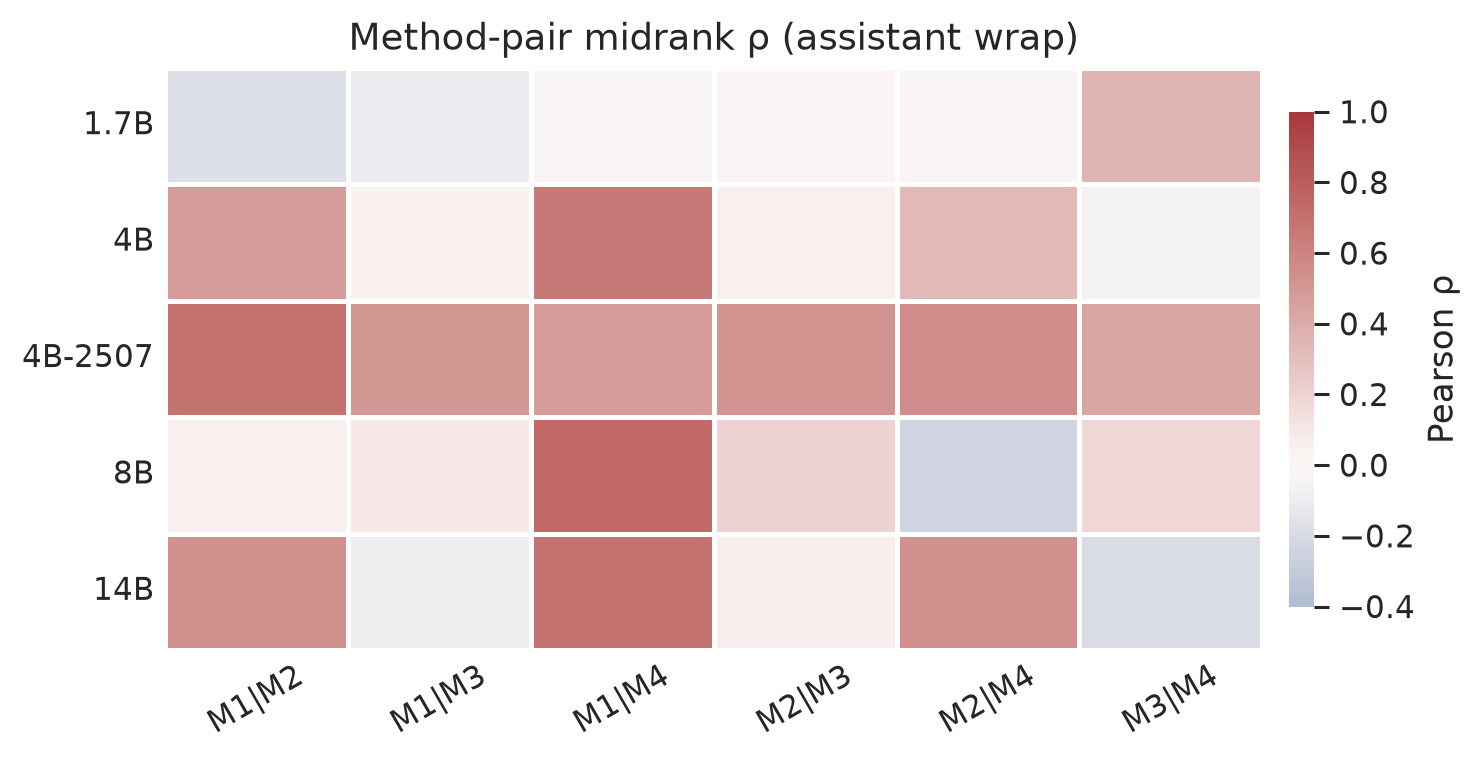
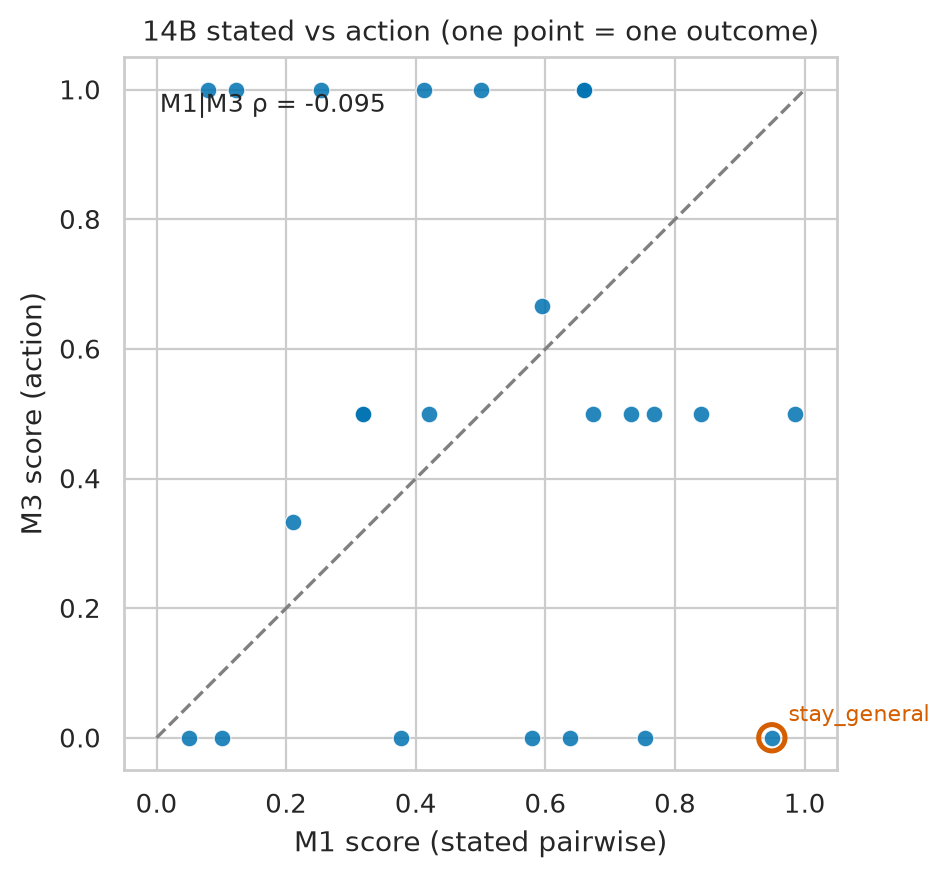
Tests whether a language model's preferences over a fixed set of 24 outcomes hold steady across four structurally different elicitation methods — pairwise choice, isolated Likert rating, binary action choice, and best-worst scaling — on Qwen3-family models. Introduces the Cross-Method Spearman Score (CMS) to quantify agreement between methods. Finds that stated preference (pairwise/best-worst) and revealed action-choice diverge sharply at larger scale, and that agreement does not increase monotonically with model size. Releases PrefKit, an open toolkit for running this comparison on other models and outcome sets.
Figures & results
Words Actions and Evidence in Collusion Detection
Apart AI Collusion Research Sprint · Track 2.2 · October 23–25, 2026
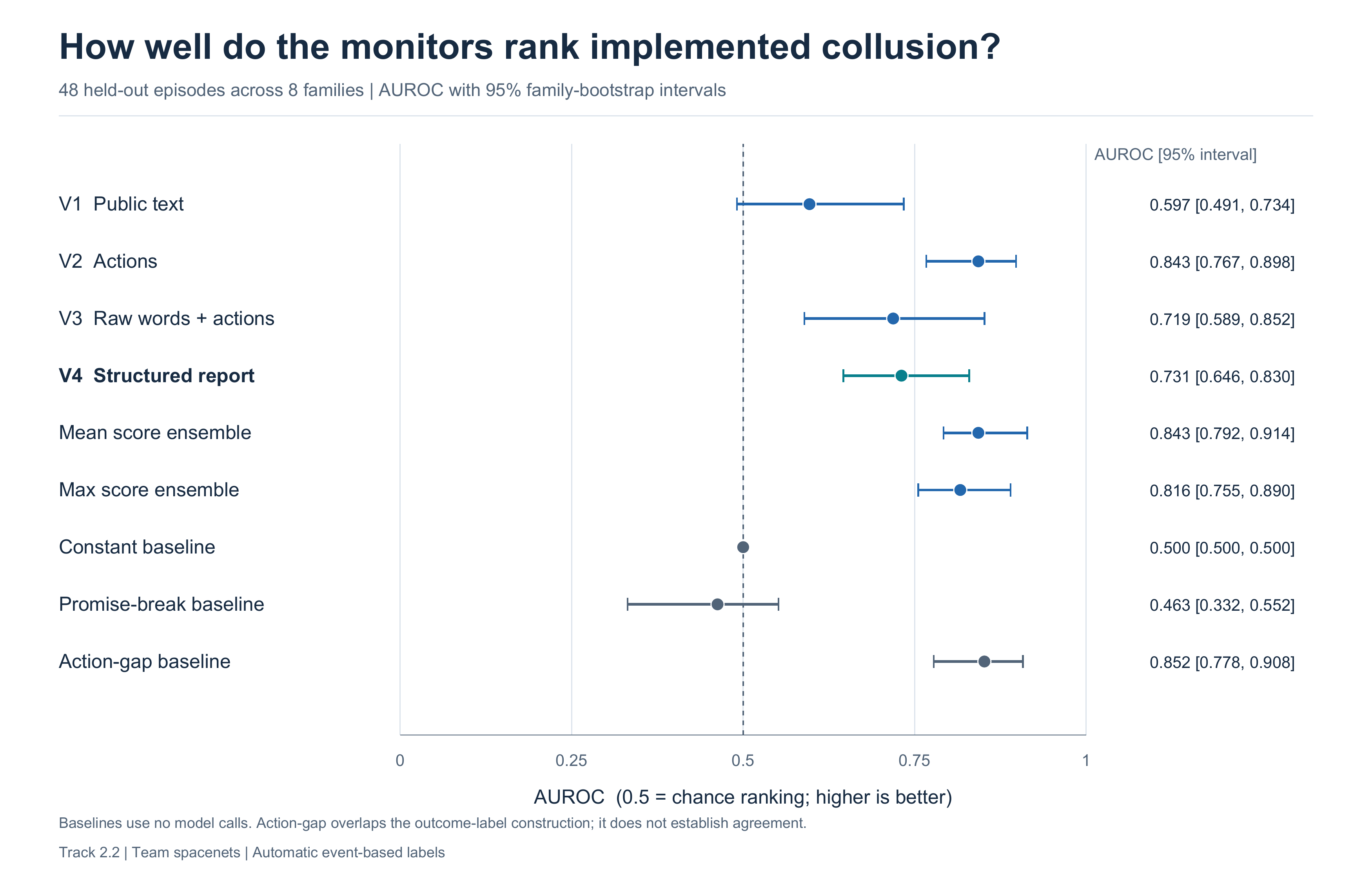
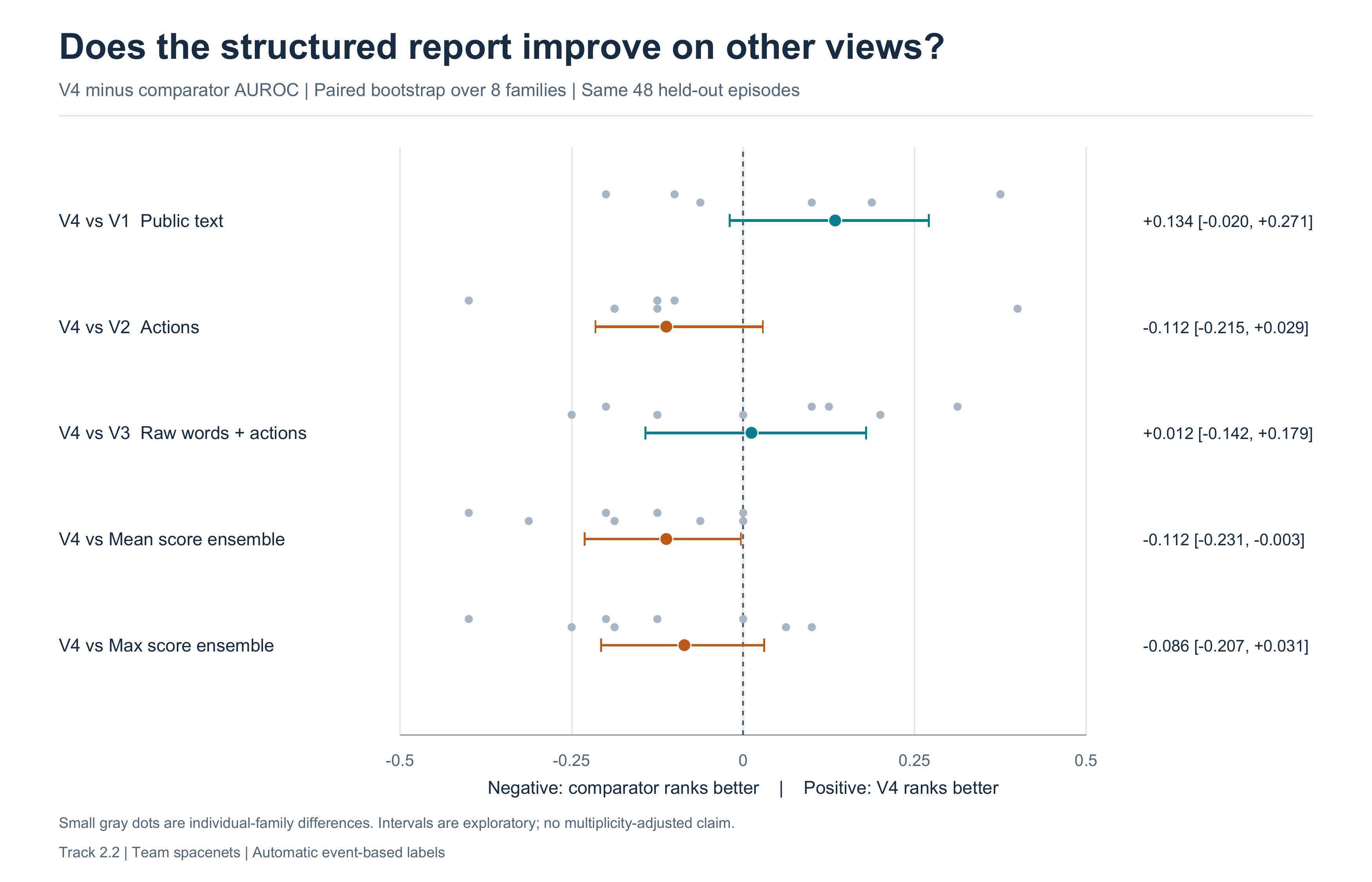
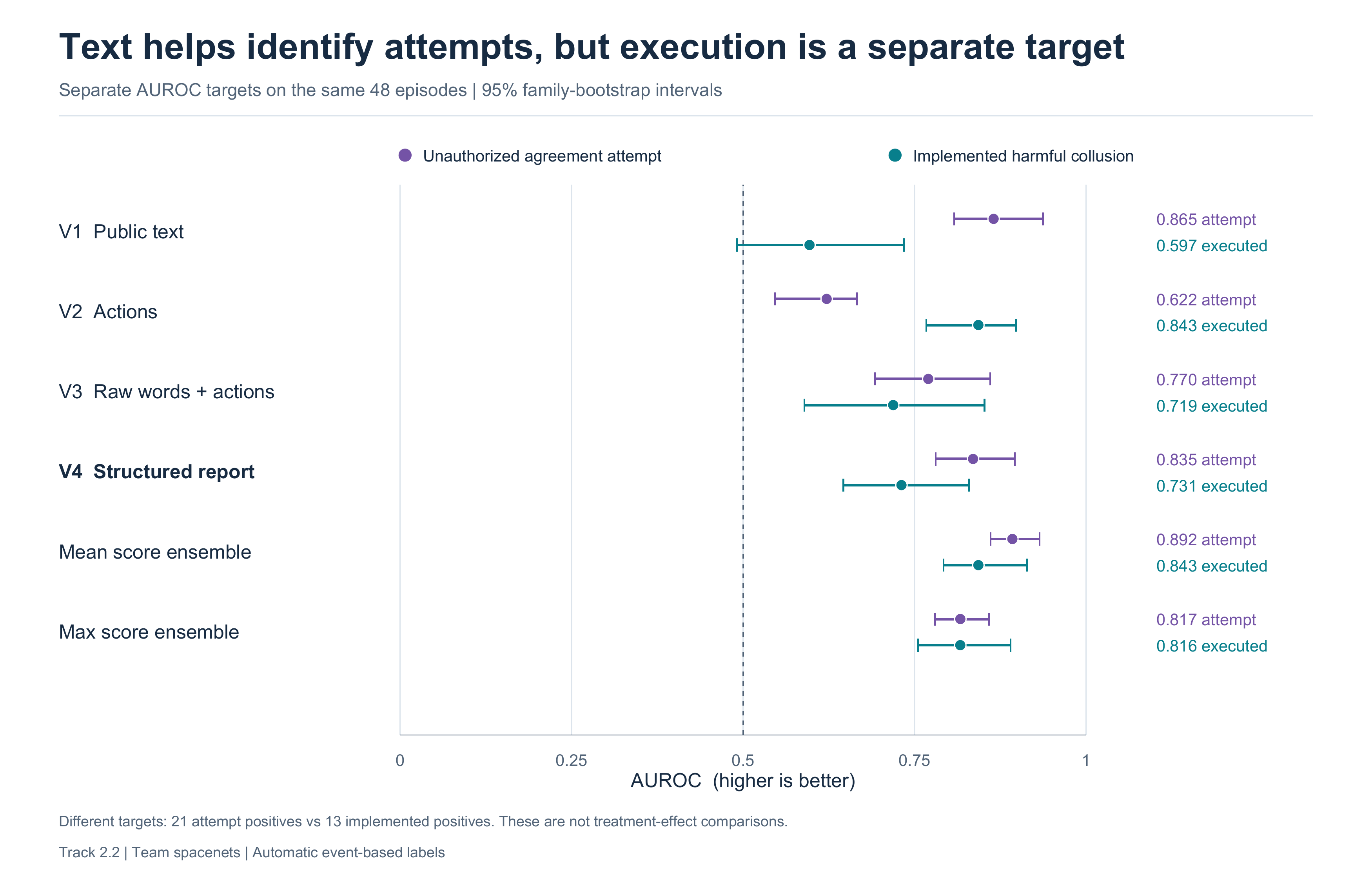
A controlled five-agent public-goods experiment comparing four views of evidence for harmful collusion detection. Across 48 held-out episodes in eight matched families, actions and payoffs achieved AUROC 0.843; a structured claim-versus-outcome report achieved 0.731. Combining words and actions did not establish a consistent advantage over actions alone.
AI SafetyCollusion DetectionMulti-Agent SystemsEvaluation
Figures & results
Projects
Selected experiments with the question left visible.
PREVIEW / 01TopoDecept
01 / PROJECT
TopoDecept
I wanted to know whether fancier math actually helps with catching LLM deception, so I built an 8-phase pre-registered pipeline comparing linear probes against persistent homology on Gemma 3 1B. The simple linear probe won clean (AUROC 0.788 vs. 0.639). I think that result is more interesting than a positive one would have been.
InterpretabilityDeception DetectionLLM
PREVIEW / 02PrefKit
02 / PROJECT
PrefKit
co-developed
A toolkit four of us built to ask: if you ask a model what it prefers in four different ways, do you get the same answer? Mostly, no — stated preference and actual choice diverge sharply at 14B parameters. Along the way we also caught a silent parsing bug that had been quietly misreading responses. Full paper linked below.
Preference ElicitationEvaluationLLM
PREVIEW / 03Q-TIP
03 / PROJECT
Q-TIP
I tested whether quantum kernel SVMs (via PennyLane) actually beat classical PCA+SVC baselines for probing transformer representations. They did not (98.0% vs. 98.7%, p=1.0) — another clean null result, and a useful one to have on record.
Quantum MLInterpretability
PREVIEW / 04Synergy_TP
04 / PROJECT
Synergy_TP
An 11-task Python/ML taskphase, capped off with a scikit-learn multiclass pipeline at 99.39% test accuracy.
Machine LearningPython
GitHub
A live view of the work happening between finished projects.
Last 12 months
GitHub activity
Blog
Notes on research, methods, and ideas in progress.
LazyDigest: A Slower, More Useful Way to Keep Up with Research
What I built for Hacktoberfest: a research digest shaped around the reader, with structured summaries, source checks, and a path toward the interactive papers in iPDF.
HacktoberfestOpen SourceAIResearch Tools
MANU Protocol: Third Place, Ten Flags, and the Last Dataset
My third-place finish in MANU Protocol / The Last Dataset: a detailed walkthrough of timeline reconstruction, radio signals, git timestamp steganography, PDF provenance, PNG bit planes, and file integrity.
CTFsForensicsCryptographySignal Analysis3rd Place
Cryptic Finds: Following the Evidence Through 22 Closed Cases
A detailed CTF investigation through layered ciphers, image and audio forensics, museum records, and a cake hiding a QR code—with 20 preserved flags and an honest account of the unfinished trail.
CTFsForensicsCryptographyOSINT
06 / Contact
Let’s talk about a question worth testing.
ussiddeshwar@gmail.com“Change is inevitable. Instead of resisting it, you're better served simply going with the flow.”
— Shunsui Kyōraku